Before a cold-weather slab pour in Raleigh, the job needs enough finishing equipment to work a slab that sets later than usual, a saw ready for control joints on a later schedule, and curing and protection supplies on site before the truck arrives. Cold concrete sets slower, so the equipment and supplies plan has to account for a longer, tighter day.
The first cold snap of the season tends to catch at least one crew off guard. The pour is booked, the forms are set, and then the overnight forecast drops into the 30s. Nothing about the job has changed on paper, but the slab is going to behave differently, and the list of what needs to be on site gets longer.
This guide walks through the construction equipment and supplies worth lining up before a fall or winter pour, and why each one matters more once temperatures drop.
Why Does Cold Weather Change What You Need on Site?
Cold weather stretches out every stage of the slab, from setting to finishing to curing, and that changes how much equipment and how many supplies a crew needs to keep things moving. The National Ready Mixed Concrete Association's rule of thumb is that a 20°F drop in concrete temperature roughly doubles the setting time.
That timing hits the Triangle right about now. According to the State Climate Office of North Carolina, Raleigh's average first frost lands in the second half of October, and the first freeze usually follows one to two weeks later. Daylight saving time also ends on November 1, so crews lose an hour of evening light right as slabs start taking longer to come ready.
The Triad usually runs a bit cooler than the Triangle and the coast a bit warmer, so a crew working near Colfax may need this plan earlier in the season than one working near Wilmington.
What Finishing Equipment Should Be Ready for a Cold-Weather Pour?
Plan for more trowel capacity than you would use in summer. When a slab comes ready late in the day, the window between "ready" and "too hard" gets squeezed against sunset, and the only way to protect that window is to cover more square footage per hour once finishing starts.
On mid-size and larger slabs, that often means adding a ride-on trowel. On smaller slabs, or around columns and walls, a second walk-behind may be the better fit. Magic screeds and power buggies help on the front end too, since getting concrete placed and struck off quickly keeps the slab from losing heat while the crew is still moving material.
M&N rents power trowels, ride-on trowels, magic screeds, power buggies, concrete saws, and plate compactors, and the full construction equipment lineup is a good place to start before the pour. The same equipment is also available to buy from manufacturers M&N has long-standing relationships with, including Whiteman, Multiquip, Husqvarna, and Allen Engineering.
Will Control Joint Cutting Take Longer in Cold Weather?
Usually, yes. The same slow set that delays troweling also pushes back the window for saw cutting control joints, so the saw plan should move later in the day too, and sometimes into the next morning.
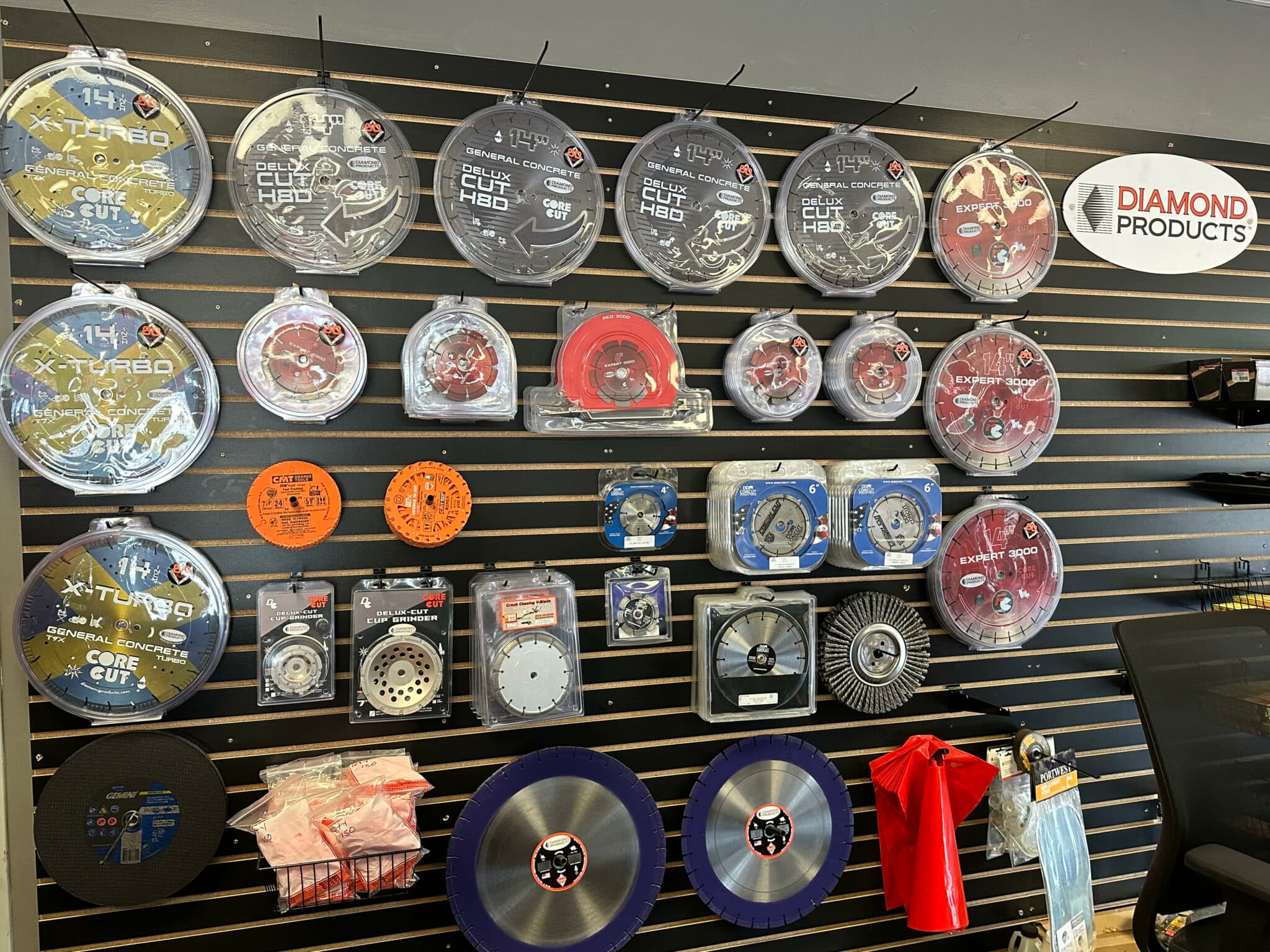
That has a practical side effect. A saw that would normally be on site for an hour may need to stay overnight or come back the next day, which is worth planning for when you set up the rental. Having blades on hand matters as well, since a dull or wrong blade is the last thing anyone wants to discover after waiting most of the day for the slab to be ready. M&N stocks blades, bits, and pans alongside its saw and trowel rentals, so those can be picked up at the same time.
Which Concrete Supplies Should Be on Site Before the Truck Arrives?
Curing and protection supplies belong on site before the first truck, not after the finish. NRMCA guidance is to protect concrete from freezing until it reaches about 500 psi, which typically happens around two days after placement, so the curing plan has to be ready the moment finishing wraps up.
A few supplies are worth checking off in advance:
- Curing compounds suited to the slab and the finish being specified.
- Hardeners or color hardeners if the spec calls for them, staged and ready, since a late slab leaves little room to go back for product.
- Bonding agents and repair products for any patching or tie-ins the job needs.
- Safety gear for longer, colder, darker days on site.
M&N carries curing compounds, bonding agents, hardeners, color hardeners, and safety gear in its construction supply catalog. For a deeper look at curing methods, the earlier guide to concrete curing in North Carolina covers the options in more detail. Just keep in mind that M&N supplies the products used to work with concrete, not the concrete itself, so questions about heated water or accelerators in the mix go to your ready-mix supplier.
How Do You Avoid Running Short in the Middle of the Pour?
Stage everything the day before, and make one supplier responsible for as much of the list as possible. A cold-weather pour leaves less room for a mid-day run to a second or third vendor, because every hour spent chasing a blade or a pail of curing compound is an hour taken out of a finishing window that's already shorter than normal.
That's where having equipment, tools, and concrete supplies under one roof pays off. M&N has three locations across North Carolina, with the Raleigh location on Tryon Road serving the Triangle, the Colfax location covering the Greensboro and Triad market, and the Wilmington location covering the coast. Same-day pickup and delivery means that if the crew realizes mid-morning that one trowel won't be enough, a second machine can often still make it to the site in time to use it.
The tool store side matters here too. Concrete vibrators, rotary hammers, angle grinders, and hand tools tend to be the small items that get forgotten until someone needs one, and picking them up with the rental saves a second trip.
Frequently Asked Questions
Can you pour concrete in Raleigh in November?
Yes, crews pour through the fall and winter in the Triangle. The difference is planning for slower setting and having protection and curing supplies ready so the slab doesn't freeze before it gains strength.
Should I rent or buy equipment for cold-weather pours?
If the crew runs a machine on most jobs, buying can make sense. For equipment used only during busy stretches or as extra capacity on cold days, renting keeps it flexible, and M&N quotes both by request.
How far ahead should I reserve equipment for a pour?
A day or two ahead is a good habit, especially during busy weeks, so you can confirm what's available at the nearest location and plan pickup or delivery around the pour.
Add us as a preferred source on Google and our jobsite guides for North Carolina contractors will show up more often when you search for equipment and supply help in Raleigh, the Triad, and along the coast.
A cold-weather pour goes a lot smoother when the equipment and supplies are already on site. Call M&N Construction Supply's Raleigh location at (919) 779-7711 to get your list lined up before the next pour.