
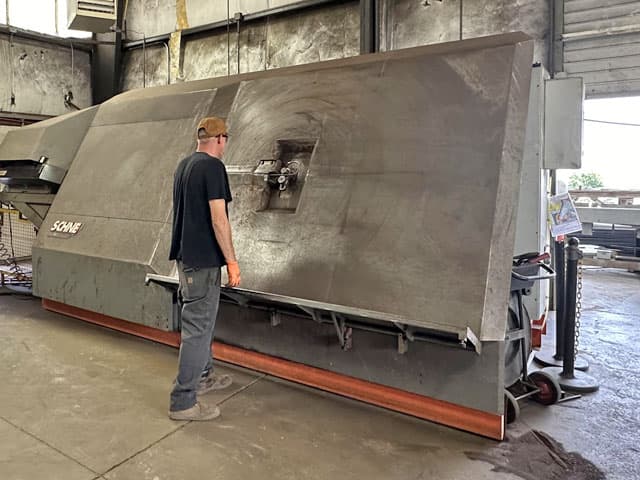
Every concrete contractor in North Carolina has been in this situation. The rebar order arrives as straight stock. The job requires specific bends, specific lengths, and specific configurations that do not match what came off the truck. So the crew starts cutting and bending on site, working through material that has to be processed before any of it can go into the ground.
The math on this feels simple at first glance. Straight rebar is less expensive per unit than fabricated rebar. So, field fabrication must be the cheaper path. What this calculation misses is everything that happens between the rebar arriving as straight stock and the moment it is placed correctly in the form. When that full picture is accounted for, field fabrication of rebar that could have been ordered pre-bent and pre-cut is one of the more expensive decisions a concrete contractor can make on a regular job, and one of the more disruptive on a time-sensitive one.
Here is what the consequences of skipping fabricated rebar actually look like on a North Carolina job site, and why the contractors who switched to ordering fabricated stock from M&N consistently report that they wish they had made the change sooner.
The Labor Cost That Does Not Show Up in the Material Price
The price difference between straight rebar and fabricated rebar is visible on the invoice. The labor cost of field fabrication is not, which is why so many contractors underestimate it until they start tracking the numbers carefully.
Field cutting and bending rebar requires dedicated equipment, dedicated setup time, and dedicated crew time that comes out of the same labor pool as the rest of the job. A crew member running a rebar cutter and bender on site is not placing concrete, not finishing, not doing any of the work that moves the project forward. They are processing material that should have arrived processed.
On a straightforward residential pour, this might mean one person spending a few hours processing rebar before the work can begin. On a larger commercial project with complex reinforcement requirements, field fabrication can occupy multiple crew members across multiple days. The hourly cost of that labor, multiplied across every job where straight stock is ordered instead of fabricated rebar, represents a significant annual expense that does not appear anywhere in the materials budget because it is absorbed into general labor costs instead.
The honest comparison is not straight rebar price versus fabricated rebar price. It is the straight rebar price plus all associated field labor versus the fabricated rebar price with zero additional processing labor required. That comparison almost always favors fabricated rebar, often substantially.
The number most contractors do not track: How many crew-hours per month are spent cutting and bending rebar on site rather than on productive job work. Contractors who start tracking this number are consistently surprised by how large it is, and that surprise is typically the moment they call M&N to discuss fabricated rebar.
Field Fabrication Errors Create Problems That Compound Through the Entire Pour
Rebar that is cut or bent incorrectly in the field creates problems that do not stay contained to the rebar itself. They propagate through every subsequent step of the pour.
A bar cut short by two inches does not simply mean a shorter bar. It means a bar that cannot achieve the required lap splice with adjacent reinforcement, which affects the structural integrity of the connection. A bend at the wrong angle or to the wrong radius creates a bar that does not fit the intended position in the form, which means either the form has to be adjusted, the bar has to be reprocessed, or the reinforcement is placed in a position that deviates from the engineered drawing.
On jobs with structural engineers and inspections, reinforcement that does not match the approved drawings is a field correction that delays the pour until it is resolved. The cost of that delay, in crew standby time, equipment idle time, and schedule impact on subsequent trades, is an order of magnitude larger than the cost of the rebar correction itself. And the root cause traces directly back to a field fabrication error that a fabricated order would have eliminated.
Even on jobs without formal inspection, rebar placement that deviates from the design creates concrete that performs differently than the design intended. For residential slabs, foundations, and flatwork, these deviations may never manifest visibly. For structural elements, retaining walls, and load-bearing applications, the consequences of inadequate reinforcement coverage or improper lap lengths show up over time in ways that are expensive and liability-laden to address.
What fabricated rebar eliminates: Every bar in a fabricated order from M&N is cut and bent to exact specifications using industrial equipment calibrated for precision. The bars arrive job-ready. There is no field measurement, no field cutting, no field bending, and no margin for the human error that field fabrication introduces at every processing step.
The Equipment Cost and Maintenance Burden of On-Site Fabrication
Field rebar fabrication requires equipment. Rebar cutters and benders capable of processing the full range of bar sizes used in commercial and residential concrete work are not small or inexpensive tools. They require maintenance, they have consumable components that need regular replacement, and they occupy trailer or truck space that could carry other equipment.
Contractors who fabricate rebar in the field either own this equipment and absorb the capital cost, maintenance cost, and carrying cost, or they rent it and absorb the rental cost plus the setup and breakdown time on every job where it is needed. Either way, the cost is real, and it is directly attributable to the decision to process rebar on-site rather than ordering it fabricated.
There is also the storage and handling dimension. Straight rebar in standard lengths requires significant storage space and handling logistics at the staging area. Fabricated rebar, delivered to spec for a specific job, arrives ready to go directly to the placement location. The reduction in on-site material handling for contractors who switch to fabricated orders is a practical benefit that shows up in job flow and crew efficiency in addition to the direct cost savings.
Schedule Risk Is the Consequence That Matters Most
In North Carolina's active construction market, schedule adherence is the metric that most directly affects contractor profitability and reputation. Jobs that run behind schedule create cascading impacts on other contracts, damage relationships with general contractors and owners, and, in some cases, trigger liquidated damages provisions in the contract that directly reduce job profitability.
Field rebar fabrication introduces schedule risk at the start of every pour. The processing has to happen before the placement can begin, and the processing takes time that is often underestimated in the job schedule. Weather delays that push a pour mean that rebar, which was processed and ready, has to be managed and protected on site. Changes to the pour sequence require resequencing the fabrication work as well. Every source of schedule variability in field fabrication is a risk that a fabricated order eliminates.
M&N's fabricated rebar team brings extensive hands-on experience processing reinforcing steel for North Carolina contractors. Orders are delivered on the schedule the job requires, which means the rebar arrives when you need it, ready for placement, without any site processing standing between delivery and work. For contractors managing tight schedules across multiple active jobs, that reliability has a value that goes well beyond the direct cost comparison.
Complex Geometry Is Where Field Fabrication Fails Most Visibly
Standard straight cuts and 90-degree bends are the most manageable field fabrication tasks. The work that creates the most significant problems is complex geometry: stirrups, ties, spiral reinforcement, compound bends, and configurations where multiple bends have to be positioned precisely relative to each other to produce a bar that fits its intended location in the structure.
Field fabrication of complex bent reinforcement using manual or semi-automated equipment is slow, imprecise, and physically demanding. The bars that come out of field fabrication for complex configurations vary in ways that accumulate across a large order. A stirrup that is half an inch wider than specified may not seem significant in isolation, but a column cage assembled from stirrups that are all slightly different from the specification creates a reinforcement assembly that does not match the design, requires field adjustment, and introduces variability into an element where precision matters.
Industrial rebar fabrication equipment processes complex geometries to consistent specifications across every bar in the order. The first stirrup and the hundredth stirrup are the same. The reinforcement that arrives on site from M&N can go directly into the form without measurement, adjustment, or field correction. That consistency is what allows skilled placers to work efficiently rather than working around the variability introduced by field fabrication.
What North Carolina Contractors Are Choosing Instead
M&N Construction Supply has been fabricating rebar for North Carolina contractors from our locations in Wilmington, Raleigh, and Colfax for decades. Our fabricated rebar service covers the full range of residential, commercial, and infrastructure reinforcement requirements. We cut and bend to your specifications, deliver on your schedule, and back every order with the extensive knowledge and hands-on experience our team brings to every project.
The contractors who work with M&N for fabricated rebar consistently report the same outcomes: crews that spend their time placing concrete rather than processing material, fewer field errors and corrections, better schedule performance, and overall job costs that compare favorably to the apparent savings of field fabrication once the full labor and risk picture is accounted for.
If your crews are still processing rebar in the field on jobs that could be running fabricated stock, it is worth having the conversation about what that is actually costing you. Contact M&N at (888) 511-8113 or get a quote here, and we will work through the specifics of your job requirements with you. We are available Monday through Friday from 7 am to 5 pm at all three North Carolina locations, and we are ready to show you what fabricated rebar actually delivers on a real job.
While you are at it, browse our full range of construction products and equipment to see why North Carolina contractors have made M&N their one-stop shop since 1967.